

Gerrymandering has become a harsh new reality of the modern political landscape. It started in August of 2025 when Texas lawmakers redrew districts prematurely to give the GOP more House seats. In retaliation, California redrew their districts to give Democrat lawmakers more seats. This was followed by a myriad of other states following suit including Missouri, North Carolina, Ohio and now possibly Virginia.
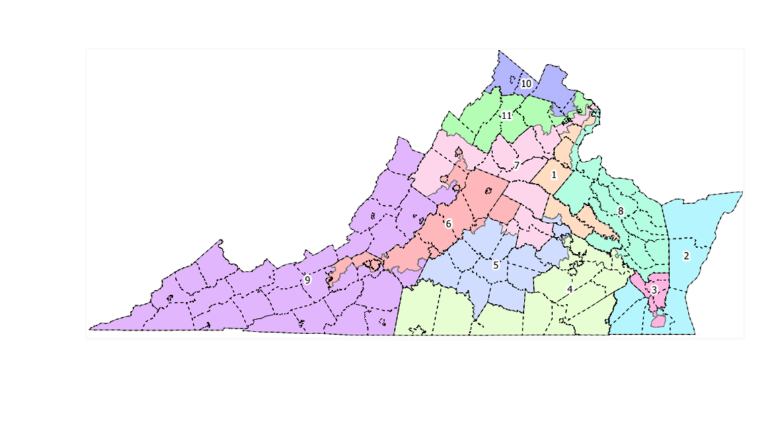
Governor Abigail Spanberger recently signed a bill approving a state budget with an included referendum on redistricting and a proposed map. The vote is scheduled for April 21. It would change Virginia’s state constitution to allow for redrawing the districts.
The proposed map would give an extreme advantage to Democrat lawmakers, with analysts believing Democrats will be nearly unstoppable in ten out of Virginia’s eleven districts. Generally, congressional districts are drawn at the end of every decade, using information from the U.S. Census which determines the number of Congressional districts each state has.
Gerrymandering isn’t a new political tactic by any means, being used since the creation of the United States. Gerrymandering happened as far back as 1788, in which Anti-Federalists drew Virginia’s Congressional maps to force Federalist James Madison to fight for the same seat as Anti-Federalist James Monroe in an attempt to keep him out of Congress.
The new map would have an undeniably significant impact on the upcoming 2026 midterm elections, in which Trump is already currently slated to lose seats.
A judge in Tazewell county recently put the bill on hold in an emergency lawsuit from Rep. Ben Cline that ruled that the language used in the ballot is “slanted.” The ballot in question reads as follows: “Should the Constitution of Virginia be amended to allow the General Assembly to temporarily adopt new congressional districts to restore fairness in the upcoming elections, while ensuring Virginia’s standard redistricting process resumes for all future redistricting after the 2030 census?” Cline finds issue in the “restore fairness” part of the ballot. “We would argue that fairness already exists in the redistricting process, that we don’t need to suspend nonpartisan redistricting, that we don’t need to redraw these districts to favor one party over another,” Cline said in an interview. Virginia Attorney General Jay Jones publicly said that his office will be appealing the decision.