

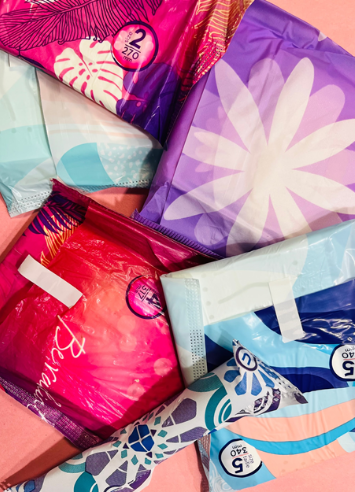
Manchester students were interviewed about their views on the prices of menstrual products and if they felt they were reasonably priced. With the added input of some experts, we are starting off 2026 with Manchester’s current opinion on period product pricing.
“They are definitely overpriced for some cotton based adhesive or a tiny piece of plastic,” stated Zoe McTarnahan Senior at Manchester when asked if she felt period products were fairly priced. When speaking with Dr. Corinne Tuckey-Larus, M.D. at Virginia’s Physicians for Women who specializes in Gynecology and Obstetrics, she responded, “They’re reasonable, and it depends upon how much you use and how much the price impacts you”.
Based on an article from The ISSA (The Association For Cleaning and Facility Solutions) which includes research from a Chicago-based research firm, Circana the average cost of a box of pads is $6.50 and a box of Tampons $8.29. The price of both products has inflated since 2019 for a box of pads by 41% and a box of tampons 36%.
When asked about how they felt about the rise in prices due to inflation for period products, Manchester Senior Alex King commented, “For your average middle class family, I don’t think it would have an effect but for the lower class yes I think it would have an effect”. Aja Robertson, a nurse for Virginia’s Physicians for Women added, “I am not really concerned, just because they are a necessity so I feel like people are gonna do what they need to do to get those products.” Kennedi Spruill, a Manchester Senior was asked on the subject and declared, “How are homeless people supposed to afford them?… It’s a need, the period doesn’t go away just like that or because you hold it.”
Period products being considered a necessity means that even for those who fell or have fallen on hard times would still be in need of such a necessity like all others. However, with the current rise in prices, some might find these products unattainable on their own.
“I believe the government should try to limit the pink tax we witness in today’s market involving personal hygiene products,” informed McTarnahan when questioned if she felt the government should step in to keep menstrual product prices more affordable. Spruill also commented, “I think they should, it really shouldn’t get that expensive just because we’re girls, this isn’t something we asked for, it’s something we biologically have”.
The pink tax, a phenomenon known for upping the prices on products that are more feminine or marketed towards women while the products towards men are substantially cheaper causing women to spend on average $1,300 annually based on a JP Morgan study. With America being a capitalistic government, it raises the question on what we can or can’t do to help regulate prices to better distribute affordable menstrual products.
When asked how affordable menstrual products affect women’s health, Tuckey-Larus informed, “For people who are unfortunately not able to get clean products on a regular basis they resort to unclean methods to keep themselves clean and dry… there are women who still resort to reusing menstrual products.” Robertson when elaborating on the topic noted, “It’s a good thing. It’s a necessity, so if it’s affordable it’s less worry for a patient’s life”.
With Manchester’s Family Life Program, most students have a basic understanding of a menstrual cycle. However, a not so commonly discussed topic is irregular periods and what comes with that.“Women with long irregular periods would be greatly impacted by these prices with the yearly prices going up exponentially,” responded McTarnahan when asked how she thought those with irregular periods are affected by the prices of menstrual products. Robertson added, “I don’t feel like it is overly expensive right now, but I do feel like it could affect those who don’t make a lot of money and who have multiple people who are in need in their household”.
With prices varying for those of different circumstances, it could be hard to differentiate who is most in need of aid and where to get it. When educating on aid options for those seeking menstrual products, Tuckey-Larus informed, “We (VPFW) do drives to help moms and babies, to help young people without good access to clean menstrual products… generally you’re able to get them because Planned Parenthood is supposed to be able to provide them also…kids in school are probably more readily able to get the products but they fail to ask.”